
In my health counseling practice, when I ask clients if they use salt, they frequently tell me, “No, I eat a low-salt or no-salt diet for health reasons.” But in fact, salt is one of the most critical groups of minerals we need to ingest on a daily basis.
What many people don’t realize is that the word “electrolyte” is simply a chemical term for salt. And we absolutely need electrolytes to be healthy.
When salt dissolves in the water of our blood, it breaks into tiny charged bits. Blood carries those bits through the body so nerves can send messages, muscles can move, and fluid can stay where it belongs. We cannot hydrate properly with water alone.
As Dr. David Brownstein says, “Without salt, life itself would not be possible.” (1) Scripture treated salt as life, not as an enemy. In the Gospel of Matthew, Jesus says, “You are the salt of the earth.”
The widespread misconception about salt stems from the fact that most conventional medical doctors, who are generally not taught about nutrition, make no differentiation between white, refined salt and unrefined, mineral-rich salt.
White refined salt is primarily one mineral compound: sodium chloride.
In contrast, mineral-rich mined salts (such as Himalayan pink salt, Bolivian Rose, Redmond’s Real Salt, Celtic sea salt, or other unrefined salts) contain far more than just sodium chloride. White refined salt has been stripped of the other minerals that are naturally present in mined salts.
Unrefined, mineral-rich salt is essential for life because our enzymes cannot function without it. These natural salts contain valuable trace minerals that contribute to overall health, including small amounts of magnesium, potassium, calcium, iodine, and many others.
Mineral-rich salt helps support the proper balance of the endocrine, adrenal, and thyroid glands so they can function at their best. It also supports healthy blood pressure, aids the body’s natural detoxification processes, and—together with adequate water—is necessary for the optimal functioning of the immune system, hormonal system, and cardiovascular health. (2)
Dr. David Brownstein, a leading thyroid expert and author of “Salt Your Way To Health”, recommends a minimum of one teaspoon of mineral-rich salt in an adult’s daily diet for best overall health. He notes that if we consistently take in less than that, the body can actually become toxic.
Dr. Brownstein has also written some wonderful books on this subject, which I highly recommend. Two in particular include “Iodine: Why You Need It and Why You Can’t Live Without It”, 5th edition and “Overcoming Thyroid Disorders”, 3rd edition.. He has also joined me on my radio show. Click here if you wish to listen.
Some people are shocked by this recommendation. Yet according to my friend Dr. Bryan Ardis, a large research study involving 500,000 people across 49 countries over a 20-year period (published in 2016 by Tel Aviv University) examined salt consumption and health. The study found that a person needs approximately 5,000 to 11,000 milligrams of salt every day, and that this range is associated with a lower risk of heart disease, high blood pressure, and stroke. (3)
When I heard this, I carefully analyzed the one teaspoon recommended by Dr. Brownstein and found it to be in perfect alignment with the findings of this large study.
Every day in hospitals, patients are given a standard bag of intravenous fluids. A typical liter bag contains 9 grams of sodium chloride—9,000 milligrams of salt. More than half of that weight is chloride. This concentration matches the normal osmotic pressure of blood and is used to treat dehydration, blood loss, and shock.
For perspective, Dr. Ardis explains that a large empty capsule (like a supplement pill/capsule) filled with mineral-rich salt holds about 1,000 milligrams. According to the study, we would therefore need the equivalent of at least 5 to 11 of these capsules daily.
After thoroughly studying issues such as athlete sudden death, dehydration, heat stroke, and related concerns, Dr. Ardis spent eight years developing his hydration supplement, Hydrate Complete. It was formulated to help replenish 40 of the essential nutrients our bodies need—including 11 minerals, 11 vitamins, 17 amino acids,plus Betaine—all of which can be lost through sweating.
Hydrate Complete is designed to support heart health, energy levels, and deeper protection against heat exhaustion and dehydration. I have personally started drinking one or two servings every day and find it refreshing. It also comforts me to know I am getting all 40 of those nutrients into my body each day.
We do not simply sweat out salt water alone. Even one serving of this supplement provides under 1,000 milligrams of salt minerals. For this reason, we all still need to add additional mineral-rich salt to our daily intake alongside Hydrate Complete. You can learn more by clicking here. If you wish to try it, please use this link and the discount code “Nancy.”
According to the National Library of Medicine (MedlinePlus), common signs of dehydration include: (4)
• Feeling very thirsty
• Fatigue or low energy
• Headaches or dizziness
• Muscle cramps
• Dry skin, mouth, or eyes
• Rapid heartbeat or palpitations
• Dark urine or decreased urination
• Confusion or disorientation
• In severe cases, seizures
Staying properly hydrated is essential for overall health. It supports heart health, physical performance, recovery, immune strength, and endurance.
When we sweat, our body can lose many minerals, and these minerals need to be replenished. Unrefined, whole, mineral-rich salt contains these minerals. Mineral-rich salt can also help support the body’s natural balance by contributing to a more alkaline environment. Maintaining a slightly alkaline pH is important for overall health.
Most of us grew up using white refined table salt, but it actually lacks numerous minerals that are present in whole, natural, mineral-rich salt. Refined table salt is approximately 98 percent sodium chloride, but unfortunately it often contains anti-caking agents, chemicals, preservatives, and even sugar. Although iodine is added to many refined salts, the amount is generally insufficient “to prevent thyroid illnesses or to provide for the body’s iodine needs.” (5) Because iodine dissipates after exposure to oxygen, table salt is not a reliable long-term source of this essential nutrient.
In addition, many of our modern food sources lack vital minerals and nutrients. Soils have become depleted, and refining and processing remove many (or all) of the nutrients originally present in foods.
One significant reason for this mineral loss is the extensive use of herbicides on crops, especially ‘Roundup Ready’ products that contain the chemical glyphosate. Glyphosate is a mineral chelator, meaning it strips minerals from everything it touches.
As research has shown:
“Glyphosate-based herbicides (GBHs), consisting of glyphosate and formulants, are the most frequently applied herbicides worldwide. The declared active ingredient glyphosate does not only inhibit the EPSPS but is also a chelating agent that binds macro- and micronutrients, essential for many plant processes and pathogen resistance. GBH treatment may thus impede uptake and availability of macro- and micronutrients in plants.” (6)
The Restorative Medicine Clinic puts this in simpler terms:
“Glyphosate depletes essential minerals and promotes heavy metal toxicity. Glyphosate impairs the ability of plants to uptake minerals from the soil and decreases plant nutrient density. Additionally, glyphosate acts as a chelator, which means it binds and removes minerals from the soil and the body, even in small quantities. These factors have contributed to the widespread deficiency in many minerals in the body and soil, including magnesium, zinc, copper, cobalt, manganese, and iron. Since glyphosate is a chelator, it also has the ability to bind heavy metals and transfer them into the body.” (7)
For me, this has been one of the strongest reasons to seek out and consume organically grown fruits and vegetables whenever possible.
Salt cravings are often a signal that the body may be depleted in nutrients, minerals, and electrolytes. They can also indicate that the thyroid and adrenal glands need additional mineral support.
If you have been craving salt or have been under significant stress, you may want to consider adding a drop of iodine to your daily diet to help support thyroid health. We do not have many reliable food sources of iodine, yet it is extremely important. The form I personally use and recommend is Nascent Iodine from The Health Ranger Store.
Standard white table salt is heavily refined. Underground salt deposits are mined, heated to high temperatures, and stripped of natural trace minerals such as magnesium and potassium, leaving mostly pure sodium chloride. For this reason, I avoid ingesting it. I am also aware that this is the type of salt commonly used in many processed foods unless otherwise specified.
Dr. Brownstein notes that low-salt diets “promote toxicity” and can have adverse effects on numerous metabolic markers, including elevated insulin levels and insulin resistance. He further states that low-mineral-rich-salt diets can lead to mineral deficiencies and the development of chronic disease. (8)
In 1994, The British Medical Journal published a study conducted in the Netherlands. Researchers examined 100 men and women between the ages of 55 and 75 who had mild to moderate hypertension. When common refined table salt was replaced with mineral-rich salt high in magnesium and potassium, the study showed a reduction in blood pressure comparable to that produced by blood-pressure-lowering medications and without the pharmaceutical drug side effects. (9)
There are various types of mineral-rich salts, each with slightly different mineral profiles. I encourage you to try a few and decide which one you prefer. Celtic sea salt is often described as high in minerals, yet because it comes from present-day oceans it can contain mercury and microplastics. Personally, I prefer Bolivian Rose salt and Real Salt by Redmond, which are mined salts.
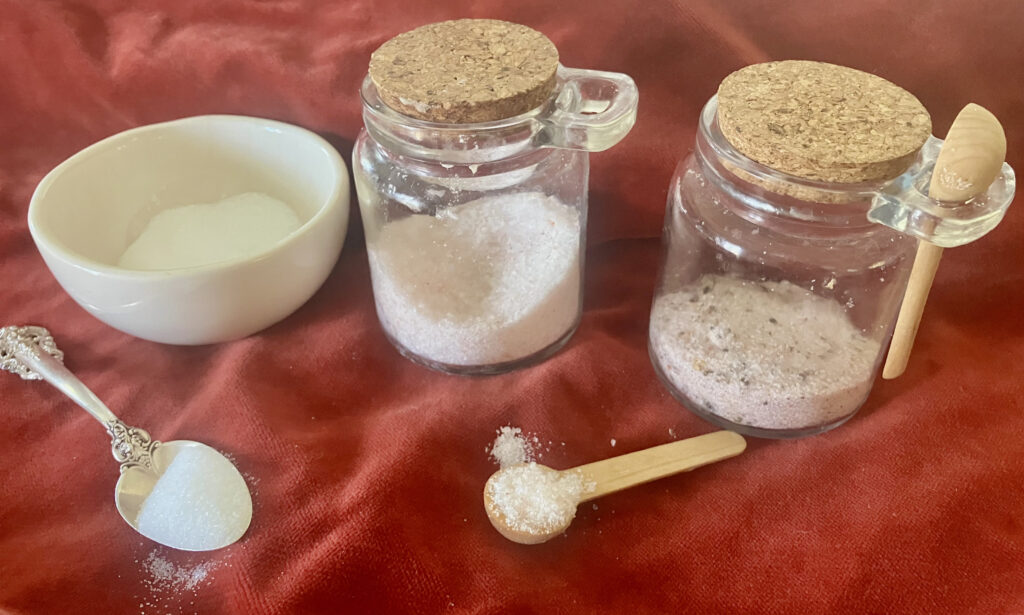
Mined mineral-rich salt tends to be cleaner and more nutrient-dense because it was formed when the oceans were far less polluted and during a more nutrient-rich time in Earth’s history. Minerals give salt its natural color, so look for salts with a pink or rosy hue. Natural, unrefined salt is not white, because tiny bits of other minerals are still in the crystal. Those minerals catch the light differently, so the salt looks pink, rose, or gray. The pink in many pink salts is mostly a little iron. That color is a clue the crystal was not stripped clean. A totally white salt has often been bleached and stripped of its minerals.
In conclusion, research shows that we will tremendously benefit from including at least one teaspoon or more of high-quality, mineral-rich pink salt in our daily diet. I also find that it simply makes food taste better.
As Dr. Brownstein would say: Salt Your Way To Health!
Note:
If you would like to learn more on how to use mineral-rich salt, iodine, hydration strategies, or a more individualized approach to supporting your thyroid, adrenals, and overall energy, I encourage you to explore my books, (5 of which are in audio), which offer practical, natural ways to nourish the body more deeply, or I would be honored to work with you as a health counselor.
Sources:
1 Brownstein, David. (2012). Salt Your Way To Health, p. 17. (2nd edition.) Medical Alternative Press.
2 Brownstein, David. (2012). Salt Your Way To Health, pp. 120, 107, 87. (2nd edition.) Medical Alternative Press.
3 Study referenced by Dr. Bryan Ardis: Research involving 500,000 people across 49 countries over 20 years, published in 2016 by Tel Aviv University, examining salt consumption and health outcomes. “Tel Aviv University study on salt intake and regulation | Baby Raphael Neelamkavil Varkey” https://www.linkedin.com/posts/baby-raphael-neelamkavil-varkey-bb88892a_response-to-video-tel-aviv-university-study-activity-7318976554477199360-HpNB
4. National Library of Medicine, MedlinePlus. Dehydration. https://medlineplus.gov/dehydration.html
5. Brownstein, David. (2012). Salt Your Way To Health, p. 26. (2nd edition.) Medical Alternative Press.
6. “Glyphosate, a chelating agent—relevant for ecological risk assessment?” https://pmc.ncbi.nlm.nih.gov/articles/PMC5823954/
7. Restorative Medicine Clinic. “Glyphosate – The Toxic Herbicide Impacting Our Health.” https://www.restorativemedicine.clinic/glyphosate-the-toxic-herbicide-impacting-our-health
8. Brownstein, David. (2012). Salt Your Way To Health, p. 53. (2nd edition.) Medical Alternative Press.
9. Geleijnse, J.M., Witteman, J.C., Bak, A.A., den Breeijen, J.H., & Grobbee, D.E. (1994). Reduction in blood pressure with a low sodium, high potassium, high magnesium salt in older subjects with mild to moderate hypertension. BMJ, 309(6952), 436–440.
copyright © Nancy Addison 2026
Nancy’s 7 books on Amazon are also in Audio and some of them are in large print:
https://www.amazon.com/Nancy-Addison/e/B00E6K5KGY/ref=dp_byline_cont_pop_book_1
Nancy’s website is: https://www.organichealthylife.com
Support Nancy’s work – Donate on venmo – @Nancy-Addison – any amount would be greatly appreciated.
Medical Disclaimer:
Information provided in this podcast, blog, article, video is for informational purposes only. The information is a result of years of practice and experience by Nancy Addison CHC. However, this information is NOT intended as a substitute for the advice provided by your physician or other healthcare professional, or any information contained on or in any product label or packaging.
Do not use the information provided in this blog, audio podcast, article, video for diagnosing or treating a health problem or disease, or prescribing medication or other treatment. Always speak with your physician or other healthcare professional before taking any medication or nutritional, herbal or homeopathic supplement, or using any treatment for a health problem. If you have or suspect that you have a medical problem, contact your health care provider promptly. Do not disregard professional medical advice or delay in seeking professional advice because of something you have read in this email.
Information provided in this video or audio and the use of any products or services related to this video by you DOES NOT create a health counselor-client relationship between you and Nancy Addison, certified health counselor. Information and statements regarding dietary supplements have not been evaluated by the Food and Drug Administration and are not intended to diagnose, treat, cure, or prevent any disease.
